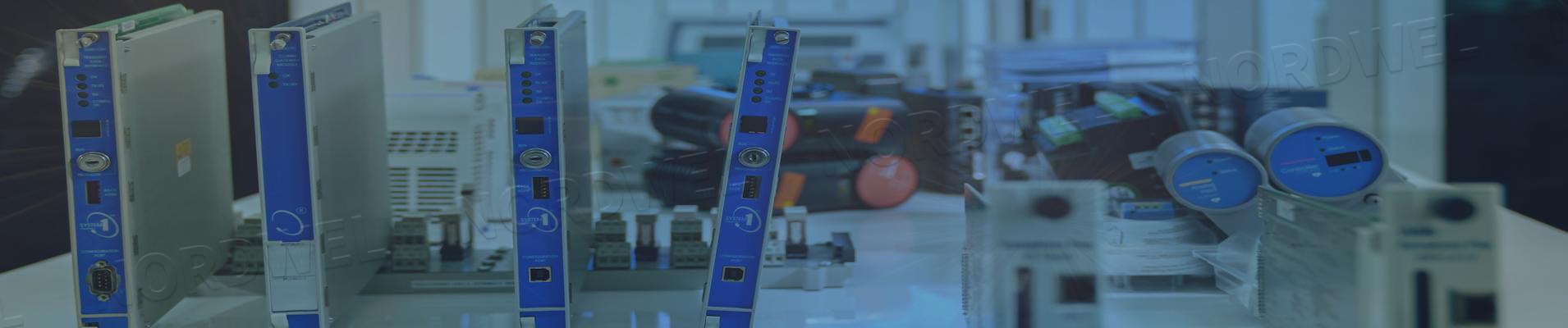
GE Mark VIe Control Serves as the Robust Core of Modern Industrial AutomationDec 02, 2025
The GE Mark VIe control system establishes itself as the foundational, flexible platform for a vast array of industrial applications, from turbine management to comprehensive plant-wide balance-of-plant operations. Its architecture is built around a high-speed, Ethernet-based infrastructure, enabling seamless distribution of Input/Output (I/O) devices across the facility. This network-centric design utilizes industry-standard Ethernet communications not only for I/O but also for linking controllers, operator workstations, maintenance terminals, and third-party systems into a cohesive supervisory interface. The integration of the ControlST software suite provides a unified environment for all critical engineering tasks, including logic programming, system configuration, data trending, and diagnostic analysis, thereby streamlining the entire lifecycle of the control solution from implementation to daily operation. The GE Mark VIe Control Architecture Integrates Controller, Network, and Specialized I/O
At the heart of the GE Mark VIe system lies a single-board controller, incorporating the main processor and redundant Ethernet drivers. This controller executes control software, stored in non-volatile memory and crafted in a configurable block language, utilizing a real-time, multi-tasking operating system for deterministic performance. Communication is facilitated through the dedicated I/O network (IONet), a deterministic, full-duplex 100 MB protocol that ensures time-coherent data exchange between the controller and distributed I/O modules. The I/O modules themselves are modular, consisting of a terminal board, terminal block, and an intelligent I/O pack. Each I/O pack features its own local processor and data acquisition board, allowing it to digitize signals, run specific algorithms at high speeds, and communicate independently over the IONet, supporting configurations from simplex to triple redundancy for enhanced availability.
The physical design of GE Mark VIecomponents emphasizes robustness, diagnostic capability, and serviceability. I/O packs are engineered for reliable operation with features that support continuous process uptime.
Online Repair and Diagnostics: A key feature is the capability for online repair per I/O pack. Technicians can replace a pack by removing its 28 V dc power connector without necessitating a full system shutdown, and the system can automatically reconfigure the new unit. Each pack includes an internal temperature sensor accurate to ±2°C, with data available in the system database to trigger diagnostic alarms or process messages if thresholds are exceeded.
Protected Connectivity and Power: Each pack is equipped with dual 100 MB full-duplex Ethernet ports for network communication and receives power from a regulated 28 V dc supply. Integrated solid-state circuit protection, with a nominal 2A trip point, safeguards the electronics. Status is clearly indicated via LEDs for power, network link, communication activity, and application-specific functions.
Flexible Termination: Signal interface begins at the terminal blocks, which are available in types like the T-module. These modules often distribute inputs to multiple I/O packs for redundancy and use removable 24-point barrier-type blocks capable of accepting wires up to 3.0 mm², with dedicated shielding provisions for signal integrity.
Building upon its standard platform, the GE Mark VIe control system offers specialized variants to meet stringent operational demands. For safety-critical applications requiring conformity to the IEC 61508 standard, the Mark VIeS Safety Management Solution provides a stand-alone safety control system. It retains the familiar ControlST software suite for maintenance simplicity but operates on a unique set of certified hardware and software blocks dedicated to Safety Instrumented Functions (SIF). Furthermore, the system accommodates diverse environmental conditions. While core controllers and I/O modules are rated for operation from -30°C to 65°C, specialized fieldbus gateway modules (for PROFIBUS, CANopen, FOUNDATION Fieldbus) have specific, slightly reduced temperature ranges. This necessitates strategic placement within control cabinets, considering the natural temperature gradient, to ensure reliable performance. All electronic components are also built to withstand broader temperature ranges for shipping and storage.
The system's flexibility is realized through its extensive portfolio of I/O modules, categorized as either generic or application-specific. Generic modules, such as discrete contact inputs, are versatile components used across nearly all applications, selected based on voltage rating, redundancy needs, isolation requirements, and safety certifications. Application-specific modules tackle more specialized tasks. For instance, servo modules deliver the high-speed processing required for closed-loop control of turbine servo valves, while vibration monitoring modules are dedicated to precisely measuring radial and axial shaft displacement in rotating equipment. This comprehensive approach allows the GE Mark VIe control system to be precisely tailored, from managing fundamental plant signals to executing complex, machinery-critical control algorithms, solidifying its role as an integrated Distributed Control Solution (DCS).