other
News
  • Emerson’s Latest Control System
    Emerson’s Latest Control System Nov 12, 2022
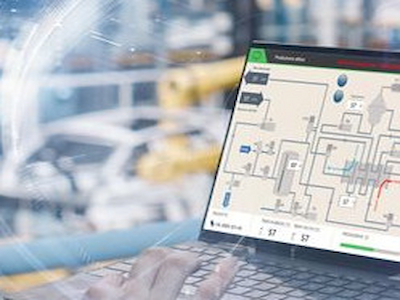
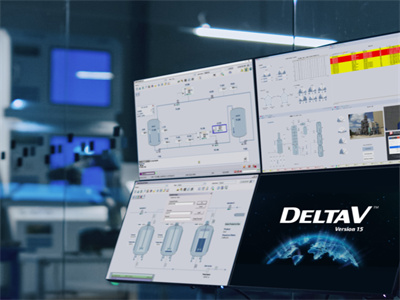
    Emerson’s Latest Control System Update Lays Foundation for Software-Driven, Data-Centric Automation Platform Emerson, a global software and engineering leader, has released a new version of its DeltaV™ distributed control system (DCS). Version 15 of the DeltaV DCS helps plants digitally transform operations through improved production optimization and enhanced operator performance. New software designed to reduce the burden of IT support and modernization spend coupled with expanded analytics will help increase flexibility and speed to market and drive operational improvements. Market forces and public expectation are putting more pressure than ever on manufacturers to drive improved performance and sustainability. Meeting these goals, especially in an era of personnel shortages, means making the most of available data. DeltaV version 15 expands access to critical data to provide every operator with actionable decision support. New infrastructure makes automation easier to set up and maintain while real-time analytics and an improved human machine interface (HMI) help operators improve situational awareness. “As the Purdue Model of control system engineering continues to flatten and more manufacturers need visibility across the enterprise, the control system plays an increasingly important role in providing real-time access to highly-contextualized, democratized data,” said Claudio Fayad, vice president of technology for Emerson’s process systems and solutions business. “Version 15 continues our focus on intuitive, software-defined architectures to help operators and engineers meet the more sustainable, efficient future of process manufacturing.” Project and operations teams rely on virtualization to reduce the hardware and energy footprint of the automation system while simultaneously increasing its availability. DeltaV now supports a hyperconverged infrastructure (HCI) virtualization option that can be deployed in half the time of a traditional virtualization setup. DeltaV HCI is easy to scale and maintain and delivers improved performance. The HCI platform is easily expandable and scalable, allowing users to future-proof their investment, and is the foundation of the DeltaV evolution into a data-centric and software-defined system. Users can increase their speed to market through the new DeltaV Spectral Process Analytical Technology (PAT). DeltaV Spectral PAT integrates two analytics solutions with the DeltaV DCS for real-time closed-loop control. This tighter control helps reduce human error and increase speed to market of quality therapies by moving plants closer to continuous manufacturing of drugs. Enhancements to DeltaV Live, a modern HTML5-based, built for purpose HMI, empower operators with easy access to expert insights for more effective, efficient decisions that drive better performance and help personnel of any skill level. Teams can also unlock anytime, anywhere access to digital twin simulations from across the globe with the new ...
    View More
  • Emerson Introduces First Pneumatic Valve System
    Emerson Introduces First Pneumatic Valve System Jun 01, 2022
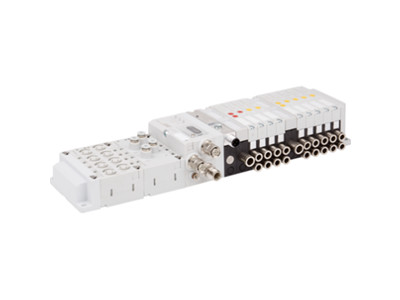
    Emerson Introduces First Pneumatic Valve System with Integrated Open Platform Communications Unified Architecture AVENTICS Series Advanced Valve Systems with OPC UA is a digital twin solution that solves interoperability challenges while improving productivity and efficiency FLORHAM PARK, N.J. (May 30, 2022) – Today, Emerson announced that its AVENTICS™ Series Advanced Valve (AV) valve system with Advanced Electronic System (AES) Profinet and Ethernet/IP is now available with preinstalled Open Platform Communications Unified Architecture (OPC UA) functionality, making it the first and only valve system to offer this directly integrated capability. The AES helps users solve interoperability challenges and access data more easily while the integration of the digital twin can improve productivity and efficiency. A valve system with integrated OPC UA functionality simplifies communication with upper systems since data and analytics are received via the valve system and communicated directly to upper systems, no gateway necessary unless deeper analysis or local dashboards are required. This can result in costs savings for users since it’s more complex and expensive to receive analytics from a valve system without OPC UA. OPC UA functionality also expands the connected capabilities of the valve system itself, making it easier for users in industries such as automotive, food and beverage, packaging, pulp and paper industries and more to digitally transform. When organizations undergo digital transformation, key protocols such as OPC UA embedded in technologies enable device monitoring and machine connectivity when sending data from a valve system to an upper system. The AES is simple to integrate and connect to new or existing applications and machines and provides easy access to data and analytics without changing the programmable logic controller (PLC). “The AVENTICS Series AV System with OPC UA is a notable leap forward in the flexibility and integration of valve systems because it makes the transition to IIoT significantly simpler for engineers,” said Nils Beckmann, senior manager of product marketing, IIoT at Emerson. “With OPC UA, engineers don’t need to change a whole system or architecture to access valve data. They now have the flexibility to continue using their own cloud systems and software to gain easy access to data and analytics without disrupting or modifying the PLC.” Developed by the OPC Foundation, OPC UA is a platform independent, information technology standard for sensor-to-cloud data exchange that features integrated security.
    View More
  •  Automation ControlLogix 5580 Controllers
    Automation ControlLogix 5580 Controllers Oct 22, 2022
    A modern control system is more than its name implies. It delivers the fast system performance, high capacity and optimized productivity that you need from a control system today.  Automation 5580 family of controllers use the Studio 5000® design environment as the standard framework that optimizes productivity, reducing time to commission. This framework manages Integrated Motion over EtherNet/IP for high-speed motion applications and SIL2/PLd and SIL3/PLe safety solutions. It can also help you create more competitive operations with: Common plant-wide control ControlLogix 5580 controllers provide multi-discipline control for discrete, motion, process and safety applications. A simplified architecture Automation Logix offerings work together in what we call our Integrated Architecture® offering. It helps you keep costs down and reduce system complexity. Enhanced security The ControlLogix 5580 controller incorporates security mechanisms like centralized authentication and access control to help keep your systems secure. We have also received ISO 27001 certification to help protect intellectual property – both ours and yours. And our vulnerability-management process aligns to IEC 29147 and 30111.
    View More
  •  Automation SLC 500 Controllers and SLC I/O Modules
    Automation SLC 500 Controllers and SLC I/O Modules Oct 15, 2022
    The SLC 500 is a small chassis-based family of programmable controllers, discrete, analog, and specialty I/O, and peripheral devices. The SLC 500 family delivers power and flexibility with a wide range of communication configurations, features, and memory options. The RSLogix 500 ladder logic programming package provides flexible editors, point-and-click I/O configuration, and a powerful database editor, as well as diagnostic and troubleshooting tools to help you save project development time and maximize productivity. Digital I/O modules are available with 4, 8, 16, or 32 channels and in a wide variety of I/O voltages (including AC, DC, and TTL). Combination modules with 2 inputs/2 outputs, 4 inputs/4 outputs, and 6 inputs/6 outputs are also available. Terminals on the 4, 8, 12, and 16-channel modules have self-lifting pressure plates that accept two 14 AWG (2 mm2) wires. LED indicators on the front of each module display the status of each I/O point. 32-channel I/O modules are equipped with a 40-pin, MIL-C-83503 type header and a removable wiring connector (1746-N3). The connector can be assembled with the wire type and length of your choice. Output modules are available with solid-state AC, solid-state DC, and relay contact type outputs. High current solid-state output modules, catalog numbers 1746-OBP16, 1746- OVP16, and 1746-OAP12, have fused commons with a blown fuse LED indication. The Step 1 - Select: • I/O modules – available in a variety of densities and voltage options. Some modules have diagnostic features, individually isolated inputs/outputs or electronic protection. • interface modules (IFMs) or prewired cables (optional) Publication 1747-SG001E-EN-E - February 2013 1746-OB16E, 1746-OB6EI, and 1746-OB32E modules provide electronic protection from short circuit and overload conditions. Wiring of 16 and 32-channel modules can also be accomplished with a bulletin 1492 interface module and pre-wired cable. All 16-channel I/O modules and catalog numbers 1746-OX8, 1746-OBP8, 1746-OAP12, 1746-IO12 are equipped with color-coded removable terminal block
    View More
  •  Automation CompactLogix 1769 vs. 5069 Series
    Automation CompactLogix 1769 vs. 5069 Series Sep 24, 2022
    Automation  CompactLogix™ 1769-L3x controllers are discontinued and no longer available for sale. To support your transition, we recommend that you migrate to our CompactLogix™ 5380 control platform. Similar to the CompactLogix™ 1769-L3x controllers, the CompactLogix™ 5380 controllers offer serial communications, better performance, increased security and more memory. 1769 Controllers The 1769 family of controllers started with the L1x, L2x and L3x, then continued with the 5370 series controllers. These controllers are part of the Logix line of Process Automation Controllers (PAC) from and are designed to accommodate small to medium sized automation projects. Some common features of the 1769 series are dual RJ45 ports for Ethernet/IP (only a single IP address allowed), LED status indicators on the front of the processor, a USB and SD card port for programming and storage, and a program/run/remote mode switch. Options in the series allow for up to 48 Ethernet/IP nodes, 16 axes of motion, and integrated safety functions. 1769 family IO modules can either be locally or remotely located, and other families of IO can be remotely connected to the controllers. Until the introduction of the 5069 CompactLogix family these controllers were the premier solution for smaller projects and will continue to be supported and have a place in the automation environment. 5069 Controller The 5069 family is a definite upgrade from the 1769 family of CompactLogix controllers. Two versions of this controller exist, the 5380 and the 5480 series of controllers. The 5380 controllers also sport dual RJ45 ports for Ethernet/IP (plus the ability to have dual IP addresses), a program/run/remote switch, LED status indicators, and a USB and SD card port. The similarities between the 1769 and 5069 families end there, though. The 5380 controllers have an integrated power supply and associated wiring connections, a four-digit digital status display, and integrated wiring terminals for processor and field power. Options in the family allow for up to 55 Ethernet/IP nodes, 20 axes of motion, and integrated safety functions. Comparison The differences between the two families become evident when you start looking at the performance of each. The 5380 controllers utilize new technology, allowing for improved scan times, communications, and capabilities. One of the biggest differences that programmers will notice is the change in memory reserve. In 1769 controllers, at least 20% of the available memory is needed to be reserved for communications and housekeeping operations while in the 5069 controllers all the available memory is usable for programming (the communications and housekeeping functions have been allocated to other memory.) The biggest advantage of this is that most programs can be moved from a 1769 controller to a smaller (and less expensive) 5069 controller. Additionally, the 5380 allows for dual Ethernet addresses instead of a single Ethernet address, allowing for...
    View More
  •  Automation MicroLogix 1400 Controllers and 1756 ControlLogix Communications Modules
    Automation MicroLogix 1400 Controllers and 1756 ControlLogix Communications Modules Sep 17, 2022
    1. EXECUTIVE SUMMARY CVSS v3 8.6 ATTENTION: Exploitable remotely/low skill level to exploit Vendor: Automation Equipment: MicroLogix 1400 Controllers and 1756 ControlLogix Communications Modules Vulnerability: Missing Authentication for Critical Function 2. REPOSTED INFORMATION This advisory was originally posted to the HSIN ICS-CERT library on November 6, 2018, and is being released to the NCCIC/ICS-CERT website. 3. RISK EVALUATION Successful exploitation of this vulnerability could allow an unauthenticated attacker to modify system settings and cause a loss of communication between the device and the system.
    View More
  • Ready to Automate? 5 Expert Insights on the Warehouse of the Future
    Ready to Automate? 5 Expert Insights on the Warehouse of the Future Sep 17, 2022
    1. Focus on automation as a way to augment and secure – not replace – human workers Consider how automation solutions can allow more opportunities to leverage human skillsets. The value of  implementing automation technology is how you can upskill workers and maximize their abilities to solve creative  and challenging issues. For example, delegating repetitive, injury-prone tasks to robots designed to depalletize can  alleviate workers from that role. 2. Anticipate a decade ahead How do you know what automation technologies are right for your business distribution? One executive of an  autonomous mobile robot (AMR) provider said in Futurum Research’s study that anticipating your peak throughput  (about three to four times your normal throughput) requirements a decade from now is critical as you adopt  automation solutions. 3. Adopt a data-centric approach Industrial-grade software can help on your journey to implement automation technologies and measure success.  With predictive data, you can get ahead of maintenance or downtime, exposing hidden inefficiencies in your  systems and creating a system of record so all teams work with the same data. 4. Integrate management systems As you prepare to implement automation technologies into your infrastructure, ensure warehouse operations data  and records are part of your enterprise’s larger strategy. Integrating data and records across warehouse, supply  chain, distribution and other business systems will give you a unified look at your entire enterprise – from the first  supplier to the last customer. 5. Challenge assumptions Focus less on automating existing tasks or processes. Instead, think of the tasks that you envision being automated  today, what opportunities that will bring, and what processes or tasks you may want to automate in the future.
    View More
  • Emerson Compact Controllers Increase ROI for Machine Builders
    Emerson Compact Controllers Increase ROI for Machine Builders Sep 03, 2022
    May 26, 2022 - Emerson, a global software, technology and engineering leader, today announced the release of its PACSystems RSTi-EP CPE 200 programmable automation controllers (PAC). This new family of compact PACs helps original equipment manufacturers (OEM) successfully meet customer requirements by minimizing the need for specialized software engineering talent. CPE 200 controllers will deliver large programmable logic controller (PLC) capability in a small, cost-effective, IIoT-ready form factor so machine manufacturers do not need to sacrifice performance for price. To stay competitive, today’s OEM machine builders must provide equipment that is ready to support analytics and give end users competitive advantage through increased efficiency, speed and quality. However, as builders develop innovative solutions for material handling, life sciences and more, they can struggle to program and deliver machine control systems on time and within budget with the performance, security and flexible connectivity customers require.  The CPE 200 series solves these problems with security-by-design, open programming and open communications built in to simplify connectivity to external analytics software platforms while reducing cost and complexity for OEMs and end users. “Gaining competitive edge in today’s marketplace means having the flexibility to connect to the wide array of equipment end users employ as part of their proprietary processes, and supporting secure, open connectivity to allow easy access to on-premises and cloud-hosted analytics platforms,” said Jeff Householder, president of Emerson’s machine automation solutions business. “The CPE 200 series controllers take advantage of Emerson’s cybersecure-by-design architecture, common programming capabilities, and IIoT readiness to provide options currently missing in legacy compact PLCs.” The controllers offer open communications through native, pre-licensed support for OPC UA Secure and other common industrial protocols for flexible connectivity over high-speed Gigabit Ethernet. IEC 61131 programming languages and C, the world’s most popular and easiest-to-use programming language, help engineers write and run the high-performance algorithms that enable proprietary production strategies and advanced automation technologies.
    View More
1 ... 10 11 12 13 14

A total of 14 pages

New Products
Leave A Message
If you are interested in our products and want to know more details,please leave a message here,we will reply you as soon as we can.
Submit

Leave A Message

Leave A Message
If you are interested in our products and want to know more details,please leave a message here,we will reply you as soon as we can.
Home

Products

contact

whatsapp