What is a DCS System? A Distributed Control System (DCS) is an advanced automation solution designed to manage industrial processes across various sections of a plant. Unlike centralized systems, DCS architecture decentralizes control tasks while enabling centralized monitoring and coordination. It integrates key technologies such as computing, communication, human-machine interaction, and process...
Humidity Control Is Crucial Maintaining proper humidity is one of the most effective ways to minimize static buildup. Dry environments, especially in colder northern regions or during winter, pose a higher risk of electrostatic discharge (ESD). Sensitive areas like control rooms, labs, or server rooms should have humidity control systems in place to protect electronic equipment. Use Anti-Static Fl...
HIMA: A Global Leader in Functional Safety HIMA is a renowned provider of safety-related automation solutions, serving industries where failure is not an option—such as oil and gas, energy, rail, and chemical processing. With a long-standing reputation for innovation, HIMA designs systems that operate independently from standard control to ensure personnel and plant safety, even in the event of ma...
Initial Hardware Verification Upon power activation, the C300 controller executes comprehensive self-diagnostics to validate all hardware components. This verification process must complete successfully before the system transitions to operational status. Firmware Initialization Phase Subsequent to hardware verification, the device loads its operational firmware from non-volatile storage. This cri...
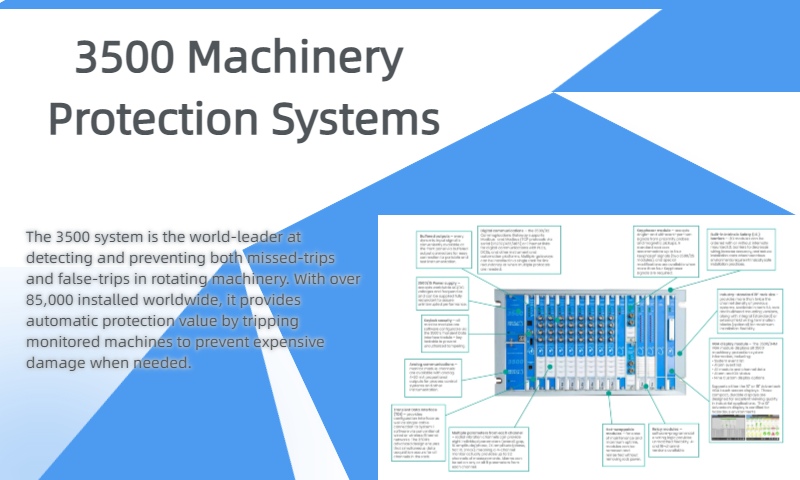
Bently Nevada 3500 System Builds a Core Network for Equipment Protection The Bently Nevada 3500 system, a benchmark in machinery protection and condition monitoring, has achieved over 85,000 installations worldwide. Leveraging its highly integrated system architecture, this platform provides comprehensive monitoring and protection for various rotating machinery, effectively mitigating the risks of...