Machinery Protection • Maintenance Planning
Bently Nevada 3500 vs. Orbit 60: A Practical Upgrade Decision Guide
Keep a proven 3500 system, improve condition monitoring, or evaluate Orbit 60? Start with the operational problem—not the newest product name.
An unnecessary migration can add cost, risk and downtime. The useful question is: what limitation is preventing the maintenance team from making a safer, faster decision?
Official-position check: Bently Nevada states that installed 3500 systems that remain fit for service do not need to be upgraded immediately unless newer functionality is required or desired. A needs-based assessment is therefore the practical starting point.
Why this decision matters
Maintenance teams are managing aging assets, limited shutdown windows, scattered machine data and fewer experienced diagnostic resources. Manufacturer materials describe the 3500 as a widely installed machinery protection platform. Published installation totals are not identical across current official pages, so this guide does not use the count as a procurement criterion. Orbit 60 is positioned as a newer protection, condition-monitoring and data-integration platform, while System 1 provides connectivity, analytics and visualization for condition-based maintenance.
60-SECOND CHECK
Which situation describes your plant?
Open the closest statement. More than one may apply.
Our 3500 system is stable and current monitoring needs have not changed
Keep the system in service and focus on lifecycle checks, exact spare identification, configuration records and maintenance planning.
We need broader data integration, more channels or cybersecurity-focused access
Evaluate Orbit 60. Its architecture is designed for plant-wide online monitoring, process-data integration and separated condition-monitoring access.
We collect alarms, but still struggle to diagnose root causes
The first gap may be analytics rather than protection hardware. A 3500 system connected to System 1 can provide continuous condition-monitoring information for proactive maintenance.
Keep 3500 or evaluate Orbit 60?
|
Decision question
|
Keep and support 3500
|
Evaluate Orbit 60
|
|
Current reliability
|
Fit for service and meeting present protection requirements.
|
New performance, integration or monitoring needs have appeared.
|
|
Primary pain point
|
Spares, lifecycle support, documentation or maintenance discipline.
|
Plant-wide scalability, data integration or cybersecurity-focused architecture.
|
|
Transition strategy
|
Maintain verified spares and plan around actual lifecycle need.
|
Use a retrofit assessment to reduce risk, cost and downtime.
|
Information that prevents purchasing mistakes
-
Machine type and criticality
-
Complete rack configuration, including I/O and communication modules
-
Exact part number, including every suffix
-
Sensor loop details: probe, extension cable, Proximitor sensor and total system length
-
Required interfaces and software environment
-
Shutdown window, test time and rollback plan
INTERACTIVE PRODUCT FINDER
What is your maintenance challenge?
Open a route to see a real product photo, the related series and the information to verify.
Route 01 — False trips or missed trips are the main concern
Route 02 — Shaft vibration or position measurement is required
Route 03 — Installation space or target size is limited
Route 04 — The installation environment is demanding
TECHNICAL SCOPE & ACCURACY NOTE
Three decisions that should not be mixed together
A machinery protection project is rarely one purchase decision. It normally contains three connected decisions: the protection platform, the condition-monitoring and diagnostic layer, and the field transducer chain. A plant can keep an existing 3500 rack while improving data use, or it can evaluate Orbit 60 because the architecture, channel scale or integration requirement has changed. Neither decision automatically proves that an existing probe, cable, Proximitor sensor, I/O module or saved configuration can be reused.
The product statements in this guide are limited to capabilities described in current Bently Nevada manufacturer materials. Final suitability still depends on the complete order code, hardware revision, rack configuration, hazardous-area requirements, machine application, wiring drawings and site acceptance criteria. Similar appearance is not evidence of compatibility.
What each layer is responsible for
Separating the layers prevents a common purchasing error: trying to solve a data problem by replacing protection hardware, or trying to solve a sensor-loop mismatch with software.
LAYER 01
Machinery protection
The 3500 platform performs continuous online monitoring and uses configured setpoints and relay logic to support machinery protection. Orbit 60 combines protection and condition-monitoring functions in a newer, distributable platform.
Do not assume: a rack replacement is required simply because the plant wants better reports or broader visualization.
LAYER 02
Condition monitoring and diagnostics
System 1 is built around connectivity, analytics and visualization. Official materials describe machine, process and controls data access, state-based collection and alarms, diagnostic plots, case management and OPC UA export capabilities.
Do not assume: software connectivity changes the protection logic already configured in a rack.
LAYER 03
Field measurement chain
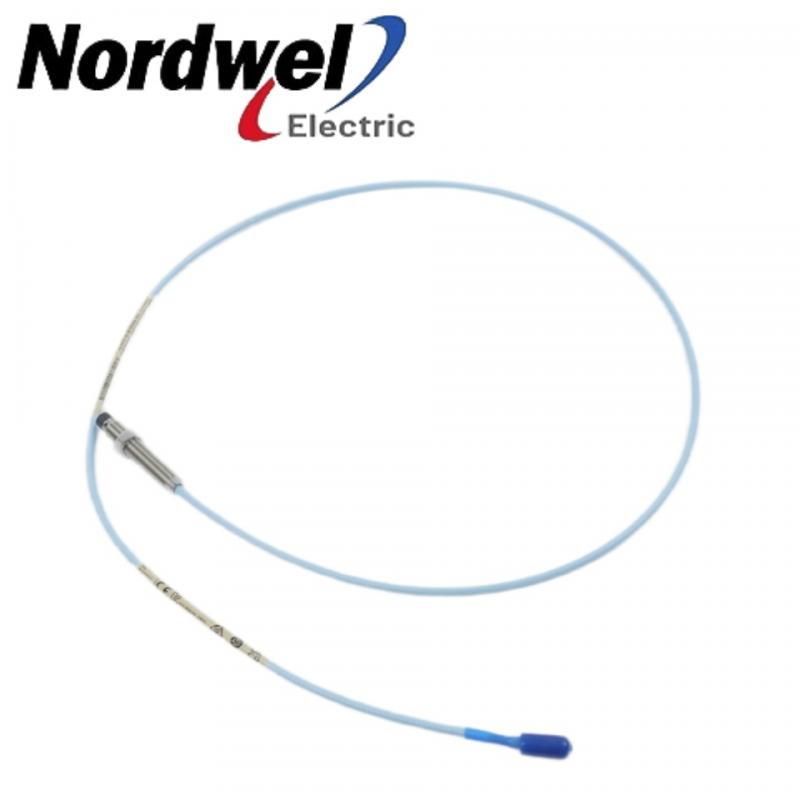
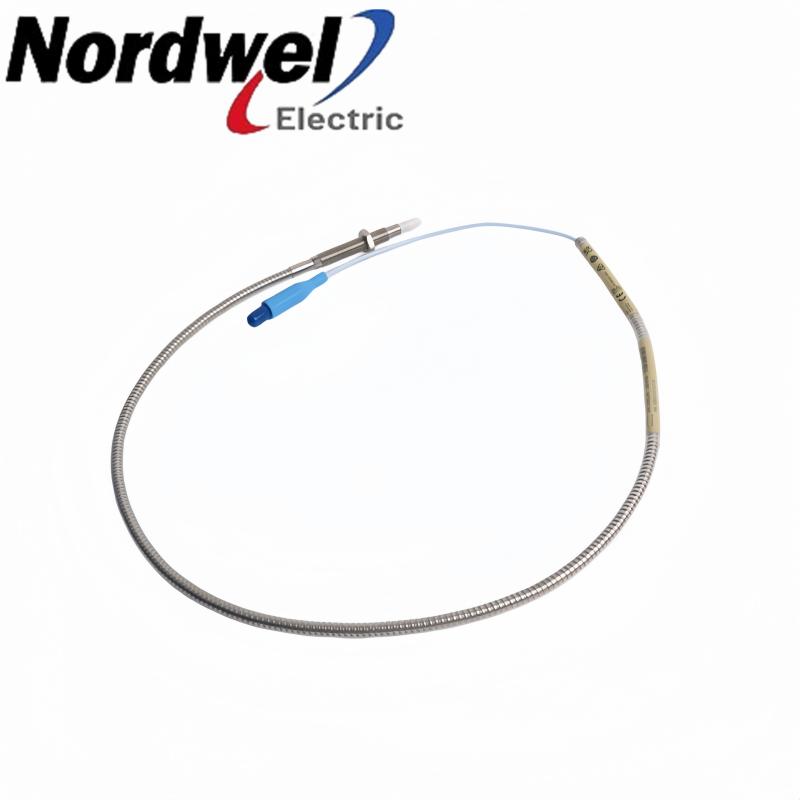
A proximity loop is a defined system, not three visually similar parts. The probe, extension cable and Proximitor sensor must be checked as one chain, including family, probe diameter, total electrical length, mounting and target material.
Do not assume: interchangeability within a specified 3300 XL 8 mm system means universal interchangeability across other families or lengths.
CUSTOMER PAIN-POINT MAP
Six problems that should drive the scope
Start with the operational constraint. The appropriate response may be maintenance, documentation, software integration, selective replacement or a platform study.
1. “We can protect the machine, but cannot explain the alarm.”
Check whether the required dynamic and process data are reaching System 1, whether baselines exist, and whether alarm states match the machine operating modes. This is first a data-context problem, not automatically a rack-obsolescence problem.
2. “The spare looks correct, but the loop will not calibrate.”
Stop comparing only connector type or probe diameter. Record the complete suffix, system family, total electrical length, target material and Proximitor label before selecting a replacement.
3. “The shutdown window is too short for discovery work.”
Complete rack, I/O, terminal, cable and configuration records before the outage. Unknowns discovered after isolation consume the same limited window needed for installation and testing.
4. “Field wiring is long, noisy or expensive to expand.”
Orbit 60 official materials describe a distributed architecture using bridged bases. That can justify a layout study, but cable routing, grounding, environmental conditions and protection independence still require project engineering.
5. “Operations, reliability and IT want different outcomes.”
Write separate acceptance criteria: protection response for operations, diagnostic coverage for reliability, and approved interfaces and data paths for IT. One generic requirement such as “upgrade monitoring” is not testable.
6. “We have many assets but limited diagnostic time.”
Prioritize asset criticality, repeatable machine states and exception-based review. System 1 capabilities such as state-based collection, alarms and diagnostic visualization are useful only when the asset hierarchy and measurement context are maintained.
A defensible 3500-versus-Orbit 60 assessment
The table below is a screening framework, not a substitute for an engineered design review. A single “yes” does not decide the project; it identifies the evidence that should be collected next.
| Question |
Evidence that supports retaining 3500 |
Evidence that supports an Orbit 60 study |
Record before deciding |
| Protection duty |
Current rack meets the documented protection functions and test requirements. |
The required channel mix, architecture or future scope cannot be met efficiently. |
Cause-and-effect, setpoints, relay logic, bypasses and proof-test results. |
| Condition data |
The 3500/System 1 path provides the data resolution and access the team needs. |
More integrated high-resolution data or a different distributed arrangement is required. |
Measurements, waveforms, machine states, sample requirements and users. |
| Network review |
Existing interfaces are documented, supported and approved for the intended use. |
The project requires architecture features described for Orbit 60, including separation of condition-monitoring data paths. |
Data-flow diagram, protocols, zones, access rules and patch responsibilities. |
| Physical layout |
Central rack location, wiring routes and environmental controls remain practical. |
A distributed I/O concept may reduce difficult field wiring or improve expansion flexibility. |
Cabinet space, heat load, grounding, cable distance and environmental data. |
| Lifecycle risk |
Verified spares, backups, drawings and trained support are available. |
Lifecycle risk is documented and a planned transition is safer than repeated emergency replacement. |
Installed revisions, failure history, lead times, repair options and outage dates. |
What to verify when retaining a 3500 rack
Rack baselineRecord rack size and mounting, every front module, rear I/O module, power supply arrangement, TDI revision and open slot.
Configuration controlKeep a dated backup, authorized setpoint list, relay logic, channel enable status and a record of changes.
Spares strategyMatch complete part numbers and revisions. Separate tested emergency spares from unverified surplus stock.
Data pathFor System 1 connectivity, document the 3500/22M TDI, rear communication interface, network ownership and required data.
The 3500 rack can use one or two power supplies, and official materials describe hot-swappable power-supply modules. This does not remove the need to confirm the installed supply types, redundancy philosophy and site procedure before work.
What to verify when evaluating Orbit 60
Official product materials position Orbit 60 as a machinery protection and condition-monitoring platform with flexible chassis choices, a distributable architecture, System 1 integration and high-speed process-data integration. Treat those as design capabilities to evaluate, not as a promise that every brownfield project will be simpler.
- Define the system boundary: one machine train, one unit, multiple remote bases or a plantwide expansion roadmap.
- Map every channel: sensor type, signal range, protection function, voting or relay requirement, recorder output and diagnostic data requirement.
- Design the data paths: identify protection processing, condition-monitoring access, control-system communication and System 1 users separately.
- Review bridge topology: assess chassis locations, grounding, cable routes, environmental limits, maintainability and failure effects.
- Plan coexistence: decide whether migration is rack-by-rack, machine-by-machine or completed during one shutdown.
- Prove acceptance: define configuration review, channel simulation, alarm and relay tests, data verification, backup and rollback criteria.
System 1: ask what decision the data must support
Collecting more data is not the objective. The objective is to shorten the path from a machine-state change to a documented maintenance decision. Manufacturer materials organize System 1 around connectivity, analytics and visualization; each pillar needs a practical owner and acceptance test.
ConnectivityList every source, protocol, measurement, time reference and user. Official materials describe access to machine, process and controls data and OPC UA export, but the site must approve the actual architecture.
AnalyticsDefine machine states, baselines, alarm bands and the fault questions to be answered. State-based alarms are valuable only when operating states and setpoints are maintained.
VisualizationAgree on who reviews plant, train and sensor views, how cases are recorded, and how a finding becomes a work order or field inspection.
INTERACTIVE COMPATIBILITY CHALLENGE
Is your Bently Nevada measurement chain complete?
Answer four checkpoints. Your result updates automatically and highlights the exact information still missing.
01
Probe
02
Extension Cable
03
Proximitor
04
Monitor
Select one answer at every checkpoint to unlock your result.
Measurement chain ready for review
You have the four core identifiers. Send the complete part numbers and photos for final compatibility verification before ordering.
Measurement chain has a compatibility gap
Use the personalized notes below before requesting a quotation. Change any answer above and the result will update.
Probe missing: send a clear full-nameplate photo and record thread, probe length and connector.
Cable missing: record the extension-cable part number and documented total system length.
Proximitor missing: photograph its label and confirm the system family and length marking.
Monitor data missing: photograph the rack front and rear I/O, including slot and module labels.
BENTLY NEVADA SOURCING SUPPORT
Need help identifying a part? Talk to Tiffany.
Send the complete part number, quantity, machine type and a clear nameplate photo.
Phone / WhatsApp: +86 18030235313
Email: sales2@mooreplc.com
Include these details
✓ Full part number and suffix
✓ Required quantity
✓ Destination country
✓ Nameplate photo
THREE PRACTICAL DECISION PATHS
Choose the route that matches the real operating gap
Open each route to compare when it fits, what evidence is required and what the project should deliver.
Route 1 — Keep the 3500 and strengthen lifecycle control
When this route fits: the installed rack still performs its documented protection duty, the channel mix remains suitable, test results are acceptable, and the main problems are incomplete records, uncertain spares or inconsistent maintenance practice.
Evidence to collectRack layout, front and rear module numbers, revisions, power-supply arrangement, TDI details, configuration backup, setpoints, relay logic, test history and failure records.
Useful project outputA controlled baseline, verified spare list, periodic test plan, ownership for configuration changes and a documented trigger for future migration review.
Do not choose this route only because migration is inconvenient. If lifecycle, channel, compliance or architecture risks cannot be controlled, they should remain visible in the decision record.
Route 2 — Keep protection stable and improve diagnostics with System 1
When this route fits: protection behavior is satisfactory, but reliability teams need better access to trends, waveforms, machine-state context, visualization or case records. This route addresses the information workflow without assuming that the rack must be replaced.
Evidence to collectAvailable measurements, 3500/22M TDI and communication details, network design, machine operating states, required plots, data-retention expectations, users and response responsibilities.
Useful project outputA defined asset hierarchy, approved data path, baseline and alarm strategy, diagnostic display set, case workflow and acceptance tests proving that required data reach the intended users.
Do not treat software as a substitute for a valid measurement chain. Poor installation, an incorrect transducer system or missing machine-state information will still limit diagnostic quality.
Route 3 — Evaluate Orbit 60 as a planned brownfield transition
When this route fits: the project has a documented need for different channel scale, a distributable layout, broader data integration, a new system architecture or a managed lifecycle transition that the existing arrangement cannot meet efficiently.
Evidence to collectComplete channel map, sensor and signal types, relay cause-and-effect, cabinet and wiring constraints, network zones, System 1 requirements, migration sequence, outage windows and rollback limits.
Useful project outputA reviewed target architecture, channel-by-channel migration plan, coexistence strategy, factory and site test procedures, configuration records, training scope and final acceptance criteria.
Do not approve the route from a product comparison alone. Brownfield success depends on field wiring, grounding, cabinet conditions, shutdown execution, data interfaces and the ability to verify protection behavior after change.
Decision rule: if the team cannot state the operating gap, the evidence and the acceptance test in one page, the scope is not yet ready for a purchase decision.
Five red flags before a purchase order
- The quotation identifies only a family name, such as “3500 monitor” or “3300 XL probe,” without the complete order code.
- The front monitor is identified, but the rear I/O module, barriers, terminations or configuration are unknown.
- A proximity component is selected by appearance while the system length or transducer family is missing.
- A migration schedule is approved before channel mapping, test criteria, backups and rollback responsibility are assigned.
- Certification or hazardous-area suitability is inferred from a series-level statement instead of the exact configured product and installation.
Frequently asked questions
Is Orbit 60 automatically better because it is newer?
No. Orbit 60 should be evaluated when its architecture, channel capability, data integration or lifecycle value solves a defined requirement. A 3500 system that remains fit for its documented duty may still be the lower-risk choice.
Can a 3500 system support condition-based or predictive maintenance?
Yes. Manufacturer materials state that connection with System 1 provides continuous condition-monitoring information. The result still depends on sensor coverage, data quality, machine-state context, alarm strategy and the diagnostic workflow.
Can one probe, cable or Proximitor sensor be replaced by appearance?
No. Verify the complete part number, family, diameter, thread, total electrical length, mounting and application. Connector fit alone does not establish measurement compatibility.
Are all 3300 XL 8 mm parts interchangeable?
Official materials describe complete interchangeability for components within the specified 3300 XL 8 mm proximity transducer system. That statement should not be extended to other transducer families, other diameters, different electrical lengths or unverified application conditions.
Does a distributed Orbit 60 layout eliminate engineering work?
No. A distributed architecture can change wiring and chassis-location options, but grounding, topology, environmental limits, protection functions, network design, maintainability and failure effects still require project-specific review.
Should a spare 3500 module be ordered from the front label only?
Not when the function depends on a rear I/O module, barriers, terminations or configuration. Record the full rack context and verify both front and rear components before ordering.
Does a series-level safety statement prove that my installed rack is certified?
No. Manufacturer materials describe safety-certified options for these platforms, but applicability depends on the exact configured hardware, approvals, application, installation and lifecycle documentation. Check the exact certificates and project requirements.
What is the minimum information for a useful quotation?
Provide the complete part number and suffix, quantity, machine tag and application, current installed component, required date, destination country, and clear label photographs. For a rack module, add the rear I/O module and configuration context; for a proximity loop, add all three chain components.
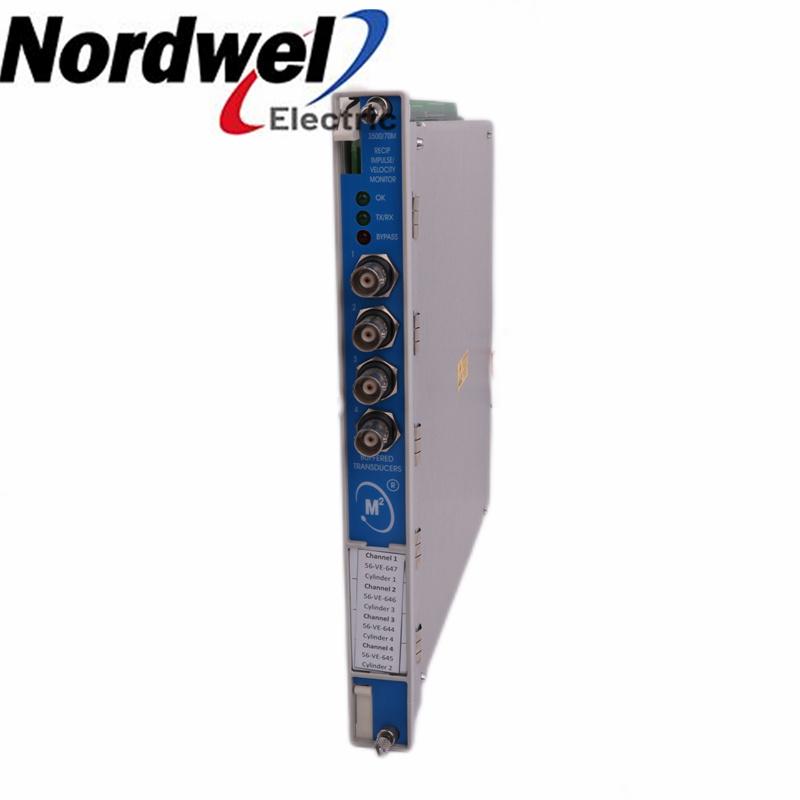
Is the Nordwel-hosted 3500/70M PDF a universal 3500 datasheet?
No. It is a reference for the identified 3500/70M 176449-09 product. It should not be used to select a different 3500 monitor or to confirm an entire rack configuration.
How should an upgrade be approved?
Approve it against documented requirements and testable acceptance criteria: channel mapping, protection behavior, relay logic, data availability, network rules, configuration backup, commissioning tests, record updates and rollback conditions.
PDF
NORDWEL TECHNICAL FILE
3500/70M 176449-09 Product PDF
Use this site-hosted PDF as a reference for the representative 3500/70M 176449-09 velocity monitor. It is not a universal datasheet for every 3500 module.
Open PDF