Replace one documented item
The installed full code, matching I/O and system record already agree.
- Confirm exact ordering code
- Confirm front/rear relationship
- Confirm condition and test scope
- Preserve existing configuration process
A module number may start an inquiry. It cannot, by itself, prove that the front card, rear I/O, rack, power architecture and installed configuration will form the system the project actually needs.
A familiar purchasing question is changing shape in 2026. Instead of asking only whether a Bently Nevada 3500 module is available, more buyers are asking whether the quoted item belongs in the complete rack they are trying to preserve, extend or build. That distinction matters because the 3500 is not a collection of independent blue cards. It is a modular architecture in which the rack, power supplies, Transient Data Interface, monitor modules, rear I/O modules, relay logic, phase-reference inputs, communications and software configuration operate as a system.
The timing is significant. Power-generation projects are moving faster as electricity demand from data centres, advanced manufacturing and wider electrification grows. Baker Hughes announced several large power-generation awards in 2026, including gas-turbine and generator packages intended to support expanding digital infrastructure. Those announcements do not mean that every new turbine project uses a 3500 rack. They do, however, illustrate why project teams are placing greater emphasis on documented, project-ready instrumentation packages rather than loosely defined component lists.
For an overseas buyer, the commercial risk is straightforward: a technically genuine module can still be the wrong purchase when the rear I/O, rack position, input type, power arrangement, approvals or configuration record do not match the installed system. The newsworthy shift is therefore not a new colour, label or module family. It is the move from part-number shopping to rack-level evidence.
The official 3500 system description identifies a required 3500/05 rack, one or two 3500/15 power supplies, a 3500/22M Transient Data Interface, one or more monitor modules and the corresponding I/O modules. Relay modules, Keyphasor modules, communication gateways, displays and intrinsic-safety interfaces may also be part of the design. This architecture is what makes the platform flexible, but it also means that an inquiry containing only one front-panel number may omit the information that determines whether the proposed part is usable.
A buyer replacing a known failed module has a different evidence burden from a buyer extending an existing rack. A team ordering a fully assembled rack has a different engineering scope again. Treating those three situations as the same request can produce an attractive price with a weak technical foundation.
The shorthand above is not a universal bill of materials. It is a reminder that every functional card sits inside a larger chain of physical and configuration decisions. The exact ordering information in the relevant official module data sheet remains the controlling reference.
The diagram is a functional orientation tool, not a slot-by-slot configuration drawing. Open the cards below it to see what evidence belongs to each layer.
The 3500/05 is offered in standard 19-inch and 14-inch rack sizes with rack, bulkhead and panel mounting formats. A photograph of the complete rack, mounting arrangement and identification label is more useful than a cropped picture of one card.
A 3500 rack can use one or two 3500/15 supplies in AC or DC combinations. With two supplies installed, the lower position is primary and the upper position is the backup. Record input-power details and both installed labels.
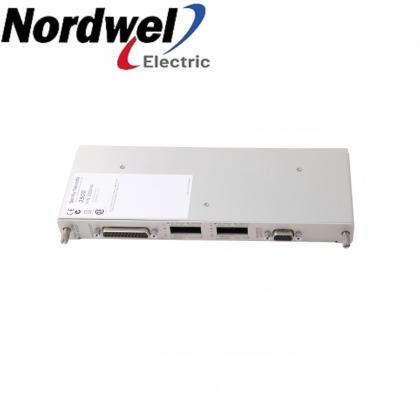
The 3500/22M TDI is the interface for rack configuration and the gateway to System 1. Its front USB access and rear 10/100 Ethernet connection do not remove the need to verify the installed rear I/O and project network design.
Quote the full ordering code from the front module and document the corresponding rear I/O. Input type, channel function, connector arrangement, internal barrier options and approvals cannot be inferred safely from a shortened family name.
Optional 3500/32M or 3500/33 relay modules and 3500/25 Keyphasor modules affect how the rack uses alarm logic, timing and phase-reference information. Include the application narrative, not only the card label.
The controlled bill of materials, rack layout, configuration backup, loop drawings, alarm philosophy and approval requirements remain the strongest project evidence. When these conflict with an informal parts list, resolve the conflict before ordering.
Overseas inquiries often pass through several teams before reaching a supplier. Every hand-off can shorten the technical description. A complete request becomes “3500 card required,” the photograph is separated from the spreadsheet, and the rear I/O or rack layout never reaches the quotation desk.
A genuine item answers “who made it?” Compatibility asks whether the exact ordering code, hardware relationship, I/O arrangement and configuration fit the intended rack and duty. A responsible quotation must keep those questions separate.
The five commonly missing elements are the complete suffix, the matching rear I/O identity, the installed slot and neighbouring architecture, the configuration record, and the project’s certification or hazardous-area requirement. None should be guessed from visual similarity. The 3500 platform covers many measurement types—from proximity and seismic channels to position, temperature, process variables, dynamic pressure, reciprocating-compressor functions and hydro applications—so a generic “3500 monitor” description is not a technical specification.
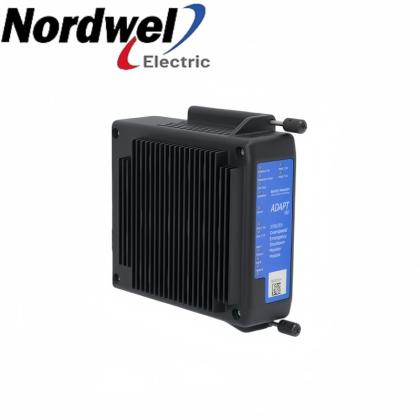
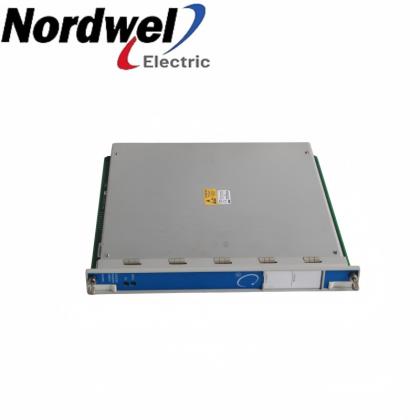
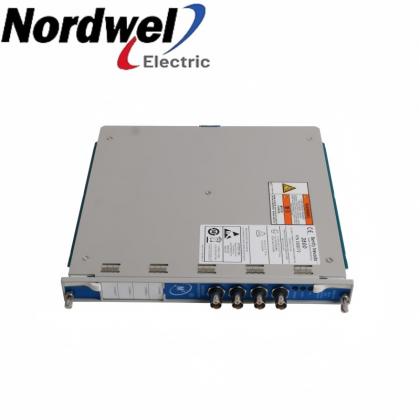
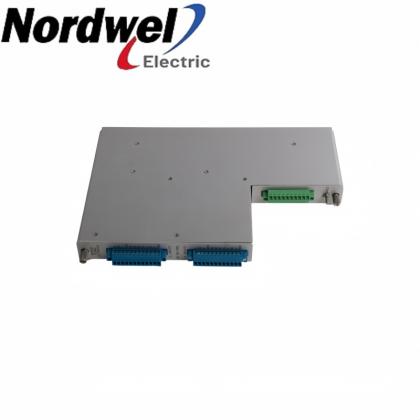
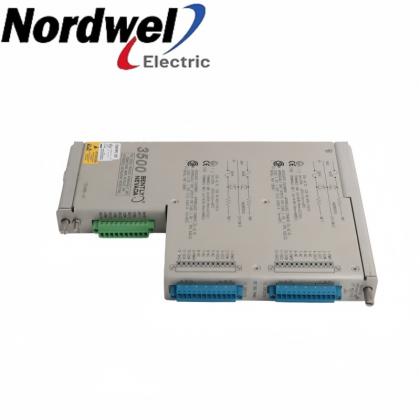
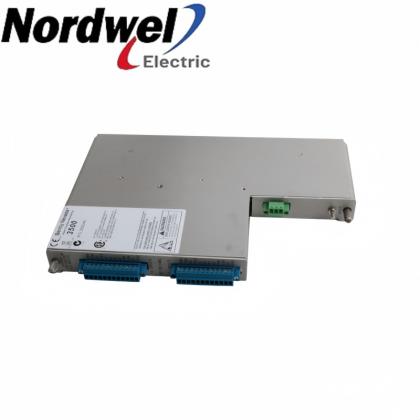
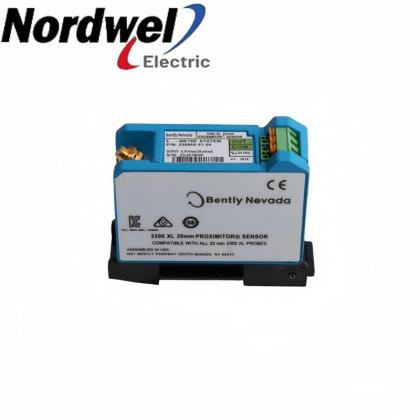
This is also why a photograph of the blue front panel is useful but insufficient. A front image establishes family and visible identity. A decision-ready evidence package adds the side or rear labels, the I/O module, rack overview, wiring context and controlled documentation.
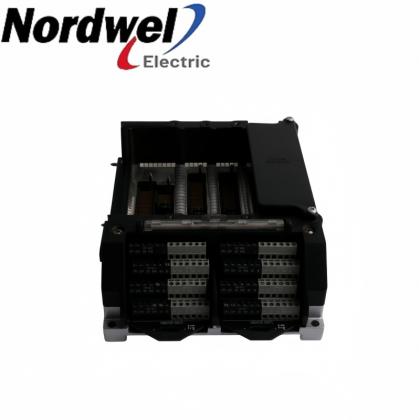
The front/rear relationship deserves particular attention because purchasing records often separate items that engineering originally treated as a pair. The front module performs signal conditioning, measurement and alarm functions; the rear I/O provides the field-connection interface for that module position. When only the front code survives in the purchasing spreadsheet, the supplier cannot safely reconstruct every connector, barrier or termination decision from appearance alone. A rear photograph is not administrative decoration—it is evidence of the installed interface.
Slot location also carries meaning. The power supplies occupy their designated positions, the TDI has a defined place in the rack architecture, and application modules are installed within the remaining module positions. A buyer should therefore preserve the slot map when documenting a rack. Moving from “we need this card” to “we need this full code for this position, paired with this rear I/O, in this rack” turns an ambiguous request into an auditable one.
Finally, the commercial description should state whether the request concerns new, unused, surplus, refurbished or repaired material and what inspection evidence is expected. Condition language cannot substitute for compatibility evidence, and compatibility evidence cannot substitute for condition evidence. Keeping the two tracks separate helps the buyer compare quotations on the same basis rather than treating unlike offers as equivalent.
Tick the evidence already available. Each green card reduces ambiguity; any open card identifies what should be collected before a final compatibility decision.
Practical rule: if the request concerns a new rack or an expansion, do not release the purchase solely from one module photograph. Ask for the relationship evidence.
The installed full code, matching I/O and system record already agree.
The request changes the installed architecture and needs an available-slot review.
The deliverable is an assembled system scope rather than a loose card list.
The three lanes may use the same family of blue modules, but they produce different supplier responsibilities. In a known replacement, the buyer normally controls the engineering decision and asks the supplier to match a documented code. In a rack extension, the buyer and engineering team must prove that the proposed addition belongs in the existing architecture. In a complete build, the bill of materials, assembly scope, documentation set and acceptance evidence must be agreed as one controlled deliverable.
That classification should appear at the top of the request for quotation. It prevents a supplier from assuming that a complete-rack inquiry is merely a shopping list, and it prevents a buyer from comparing a loose-module price with an assembled and documented rack price. The distinction is commercial as well as technical: packing, inspection, documentation and delivery responsibilities change with the scope.
A reliable procurement process does not need to be slow. It needs to put evidence in the correct order. The most efficient sequence begins with identification, then establishes the installed relationship, defines the commercial scope, resolves exceptions and only then releases the purchase order. Reversing that sequence may appear faster at first, but it pushes uncertainty into inspection, commissioning or site receipt—where correction is more expensive.
Stage one—capture identity. Photograph the complete rack before removing anything. Then capture each relevant front label, rear I/O label, power-supply label and rack identification plate. Transcribe the codes into a controlled table, but retain the photographs as the original evidence. Manual transcription can introduce missing characters, changed punctuation or shortened suffixes.
Stage two—map relationships. Put the codes back into their physical context. Record which rear I/O belongs to which front position, which power supplies occupy the primary and backup locations, and which optional modules participate in relay, communications or phase-reference functions. If the project team has a rack configuration export or approved layout, compare it with the current photographs rather than assuming the document still matches the installed state.
Stage three—classify the job. State whether the supplier is quoting one exact replacement, a group of coordinated spares, an expansion or a complete rack. Also state whether installation, configuration, engineering or commissioning is outside the supply scope. Clear exclusions are as important as clear inclusions because they stop commercial wording from being mistaken for engineering responsibility.
Stage four—close exceptions. Any disagreement between the label, drawing, spreadsheet and configuration record should become a visible question. Do not hide the conflict by selecting the document that produces the fastest answer. A good exception log names the conflicting sources, identifies who owns the decision and records the approved resolution.
Stage five—release the purchase order. Attach the final code list, quantities, condition requirements, packing instructions, required photographs and document deliverables. If a module and I/O must remain paired, write that relationship into the line-item description. If a complete rack must ship as an assembly, state whether loose accessories, spare terminals, keys or software media are included.
This evidence flow creates a traceable hand-off between engineering, procurement, supplier and receiving inspection. It also gives the receiving team something objective to check. Instead of asking whether a blue module “looks right,” the team can compare labels, quantity, paired relationships, physical condition and agreed documentation against the purchase record.
| Decision area | Evidence to request | Risk if omitted |
|---|---|---|
| Rack foundation | 3500/05 label, size, mounting format and complete rack photographs | Physical or project-format mismatch |
| Power | 3500/15 ordering codes, input voltage and one/two-supply arrangement | Wrong supply version or incomplete redundancy plan |
| TDI | 3500/22M identity, rear I/O, configuration context and network requirement | Incomplete configuration or communications scope |
| Monitor channel | Full module code, application, transducer/input type and matching rear I/O | Card fits physically but does not match the intended signal chain |
| Relay and logic | Relay-module identity, voting/alarm narrative and controlled drawings | Protection action differs from the approved philosophy |
| Approvals | Destination, hazardous-area classification and project certification requirement | Hardware may not satisfy the site documentation package |
The official 3500 literature describes a flexible, scalable machinery protection and condition-monitoring platform. The system is designed for continuous online use and to meet API 670 requirements. Various modules and system configurations carry SIL and hazardous-area approvals, and the platform can communicate with System 1 through the TDI architecture.
Those statements describe platform capability. They do not prove that every module variant carries every approval, that any rear I/O works with any front card, or that one site’s configuration can be copied into another project. Certification, ordering codes and configuration must be checked at the exact-model and project level. Likewise, the ability to use dual power supplies does not replace a review of the installed input-voltage versions and rack positions.
The 3500/15 supplies may be removed or inserted without disrupting the rack when redundant supplies are installed and the remaining supply is operating correctly, according to the official product description. That design feature is important, but it should not be rewritten as permission to change power hardware without the approved site procedure. Procurement content must respect the boundary between product capability and site execution.
Redundancy also needs precise language. Two installed supplies do not mean that the buyer can ignore either ordering code. Official literature allows combinations of AC and DC supplies, with either supply capable of powering a full rack, but the input sources and installed versions still belong in the project record. The purchase description should identify whether the requirement is one replacement supply, a matched spare strategy or a change to the rack power arrangement. Only the authorised site team should approve the last of those.
The 3500/22M TDI requires similar discipline. It supports rack configuration and forms the communications gateway to System 1, with front USB access and rear Ethernet connectivity described in official literature. Those interfaces are capabilities, not a complete network design. IP planning, asset naming, software version policy, cybersecurity controls and the decision to connect a rack to a plant network belong to the project environment. A hardware supplier should not imply that fitting a TDI automatically completes those tasks.
Certification language must remain exact as well. The 3500 family includes options and configurations associated with SIL and hazardous-area approvals, but a family-level statement cannot replace the certificate and ordering information for the exact supplied hardware. Buyers should specify the destination and required documentation early, particularly when the rack will form part of a safety instrumented function or be installed in a classified area.
This boundary protects both parties. The buyer receives a quotation that does not overstate what a model number proves; the supplier avoids promising site-specific suitability without the necessary engineering evidence. In a market where fast responses are valued, disciplined limitations are a sign of technical seriousness, not reluctance.
Our role is not to turn every incomplete request into an immediate “yes.” It is to separate what is documented from what still needs verification, then build a quotation around the buyer’s actual lane: exact replacement, rack extension or complete rack.
For time-sensitive international requirements, early evidence review can prevent repeated quotation cycles and reduce the chance of discovering a rear-I/O, power or documentation gap after dispatch.
You can start the conversation, but it is not enough for a final technical quotation. Provide the complete module code, rear-I/O identity, rack photographs and the job type whenever possible.
Not necessarily. Many 3500 functions involve a front module and a corresponding rear I/O module. The rack, power, TDI and configuration are also part of the system relationship.
No. Similar front appearance does not confirm the exact suffix, I/O type, firmware/configuration context, approvals or signal-chain suitability.
Official literature allows one or two supplies and AC/DC combinations. The installed codes, input power and primary/backup positions still need to be recorded.
It can reveal I/O modules, connector formats, installed wiring context and relationships that a front-panel photograph cannot show.
Include the intended application, controlled BOM, rack size and mounting, power input, channel list, monitor and I/O codes, relay logic, communication scope, approvals, documentation and delivery requirements.
Nordwel can organise available identification and procurement evidence. Final engineering approval, alarm philosophy and site-specific configuration remain with the authorised project or plant team.
Send one full front-rack photograph, one rear-rack photograph, close-ups of all relevant labels, the required quantity and a short description of whether the job is replacement, expansion or complete build.
Tiffany can review your inquiry package and identify which commercial and identification details are ready, missing or require project-level confirmation.


Disclaimer:
Nordwel sells new and surplus products and develops channels for purchasing such products. This website has not been approved or recognized by any of the listed manufacturers or trademarks.