other
News
  • GE IC200ALG430 Module Revolutionizes Analog Signal Processing in Industrial Automation
    GE IC200ALG430 Module Revolutionizes Analog Signal Processing in Industrial Automation Jan 06, 2026
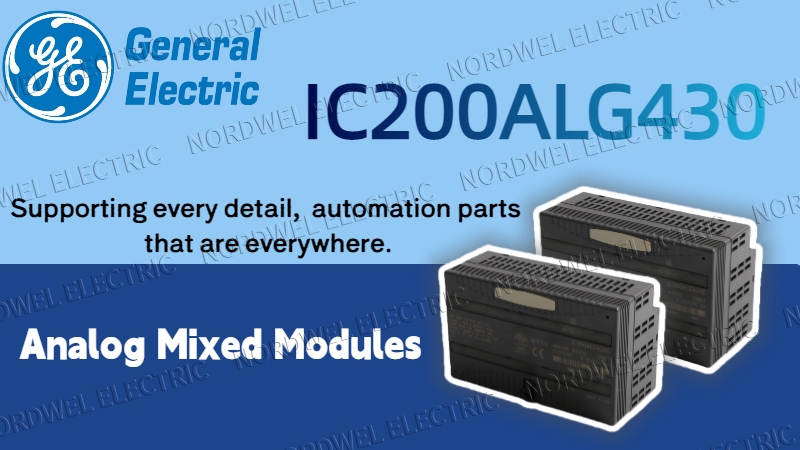
    In the field of industrial automation, the accuracy and reliability of analog signal processing are always the core of stable system operation. The newly launched high-precision hybrid module sets a new standard for data acquisition and control execution in complex industrial environments through its innovative four-channel current input and dual-channel current output architecture. This module adopts an independent external power supply design, with input and output circuits powered by separate 24V external power supplies, ensuring signal transmission stability is unaffected by power fluctuations in the main control system. Its intelligent processing mechanism is implemented through a CPU or network interface unit, capable of processing four sets of input data and two sets of output data in real time. This design is particularly suitable for production lines requiring continuous monitoring, energy management systems, and process control scenarios, providing crucial technical support for modern intelligent manufacturing. Intelligent Diagnostic System Ensures Production Continuity The GE IC200ALG430 module's integrated advanced diagnostic functions significantly improve equipment maintenance efficiency. The dual indicator system on the panel provides field technicians with intuitive status monitoring: the green FLD PWR LED displays the real-time power supply status on the field side, while the OK LED indicates the power connection status on the backplane. When a power loss is detected on the user side, the module proactively sends a fault alarm to the control system, enabling the maintenance team to take preventative measures before production is interrupted. More noteworthy is its configurable I/O default settings. Through hardware jumpers, engineers can pre-set the output state in the event of a communication interruption—either retaining the last value or reverting to a safe default value. This dual-protection mechanism significantly reduces the risk of unplanned downtime, making it particularly suitable for critical process stages in continuous production enterprises. Flexible Configuration Adapts to Diverse Industrial Scenarios The module's configuration flexibility is reflected in its dual hardware and software adjustment mechanisms. On the hardware side, through jumper settings between pins B13 and B14, users can select the output response mode according to process safety requirements. On the software side, it supports deep integration with control systems version 2.x and above, enabling software-based configuration of input states. The automatic configuration logic under different control system versions has also been carefully designed: newer systems default to zero input values, while older systems synchronize with the jumper settings. This backward compatibility ensures a smooth transition during equipment upgrades. The module also supports "Keep Last Value" or "Preset Default Value" modes for input states, allowing engineers to develop...
    View More
  • Nordwel's Seaside Christmas: A Tapestry of Holiday Joy
    Nordwel's Seaside Christmas: A Tapestry of Holiday Joy Dec 23, 2025
    When Santa  for a Seaside Visit This holiday season, Nordwel surprised everyone by bringing a very special guest to the beach. As twilight painted the sky in shades of orange and purple, guests weren't just greeted by the sound of waves—they were welcomed by a familiar, hearty laugh. There, by a beautifully decorated driftwood archway, stood Santa himself, having swapped his reindeer for the ocean breeze. Culinary Stations That Captivated the Senses Dinner was an interactive exploration, a world away from a static buffet. Live cooking stations became lively hubs of conversation and choice. At the grill, chefs seared premium steaks to personal preference, their flames leaping dramatically into the evening air. Nearby, a communal hotpot station bubbled invitingly, with guests concocting their own broths from an array of fresh vegetables, meats, and noodles. Shared Laughter in the Sand and Under the Stars With appetites satisfied, the focus turned to connection through play and song. A series of lighthearted, team-oriented games quickly got everyone mingling and laughing. These were not complex competitions but joyful, nostalgic activities that dissolved formalities. Meanwhile, a talented live band set a festive soundtrack from a rustic wooden stage. The energy peaked when the vocalist wove through the crowd, handing the microphone to guests for impromptu duets on beloved holiday classics. This personal touch turned passive listening into active participation, creating unforgettable, collective moments. As dusk deepened, the gentle crackle and shower of sparks from handheld sparklers added a final, magical layer of light to the beachfront scene. When the Night Sky Ignited with Color The evening's crescendo arrived without fanfare. As a hush settled, the first faint whistle cut through the air, followed by a deep thump that resonated in your chest. Then, the sky directly overhead shattered into a million brilliant pieces of light. For a breathtaking span, the heavens danced. Bursts of emerald green and crimson red unfurled like celestial flowers, while silver tendrils cascaded slowly toward the dark water below. Each dazzling explosion was perfectly timed to the swell of the music, creating an emotional, shared spectacle. Standing together, faces upturned and illuminated by the bursts of color, the crowd shared a unified sense of awe at the magnificent display. Quiet Conversations and Moonlit Reflections After the fireworks' final, thunderous applause faded, the night softened into a gentle conclusion. Guests gravitated back to the cozy lounge area, now serving warm spiced drinks and sweet pastries. The band switched to an unplugged, mellow set, perfect for relaxed conversation. Many took the opportunity for a leisurely, reflective stroll at the water's edge, the cool night air and the sound of retreating waves providing a peaceful counterpoint to the evening's earlier excitement. These unhurried moments allowed for personal connections to deepe...
    View More
  • Why Industry 4.0 Can't Do Without the Honeywell FC-QPP-0002 Quad-Core Processor?
    Why Industry 4.0 Can't Do Without the Honeywell FC-QPP-0002 Quad-Core Processor? Dec 19, 2025
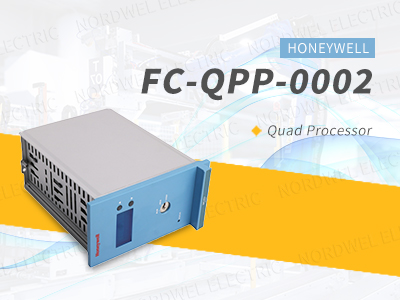
    At the heart of smart factories and automated industrial processes lies a critical decision: the choice of processing power. Industry 4.0 is not just about data collection, but about making real-time intelligent decisions at the network edge based on that data. The Honeywell FC-QPP-0002 quad-core processor, as the core processing unit of modern distributed control systems (DCS), is becoming a key driving force in realizing this vision. This article will analyze its irreplaceable role in the future of automation through five core advantages. A Reliable Engine Built for Harsh Environments The value of Industry 4.0 can only be realized on a foundation of stable hardware operation. The FC-QPP-0002 processor is designed to withstand harsh industrial environments, providing a robust core for DCS field control stations, cabinets, and power systems. It embodies the design philosophy of "high reliability, ease of maintenance, and advanced technology in harsh industrial environments," and can withstand extreme temperatures, shocks, vibrations, and electrical interference. In the fast-paced industrial environment, this inherent robustness provides a fundamental guarantee for enabling advanced applications that are continuously online. A Bridge to Seamless Integration Closed systems run counter to the interconnectivity of Industry 4.0. The FC-QPP-0002 processor, by supporting multi-layered open data interfaces, provides the hardware foundation for an open architecture in DCS. It acts as a powerful communication hub in data communication systems, efficiently managing the information flow between operator stations, engineer stations, and field devices. Compatibility with multiple fieldbus standards ensures the system can adapt to future expansion needs, whether integrating legacy equipment or connecting next-generation IoT sensors, building a truly open, future-oriented ecosystem. A Platform from Configuration to Advanced Algorithms Powerful hardware needs easy-to-use software to realize its value. The FC-QPP-0002 provides powerful processing capabilities for the DCS's "underlying localized software platform," meeting the convenient configuration needs of complex control systems while supporting users' independent development of dedicated advanced control algorithms. This dual capability is crucial: engineers can quickly deploy standardized solutions, while advanced control experts can directly deploy optimized algorithms to the control layer. This bridges the gap between operational and information technologies, making the processor a platform for technological innovation. Flexible Scalability for Complex Needs Industry 4.0 systems are constantly evolving. The FC-QPP-0002's quad-core architecture provides flexible performance scalability: one core can be dedicated to critical control loops, another handles security logic, a third manages communication protocols, and a fourth performs local data analysis. This parallel processing capability enables a single fi...
    View More
  • When Precision Meets Durability: The ABB DSTD180 57160001-HE Is Now Redefining Standards.
    When Precision Meets Durability: The ABB DSTD180 57160001-HE Is Now Redefining Standards. Dec 09, 2025
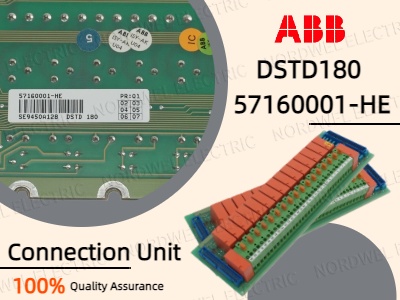
    In the demanding world of industrial automation, components are the unsung heroes. Their failure is never an option. ABB’s latest offering, the DSTD180 57160001-HE, is not merely an incremental update; it is a foundational shift. By engineering a perfect synergy between micro-second precision and rugged, long-term durability, this module is setting a new benchmark for what industry professionals can—and should—expect from a core control component. Beyond a Part Number: The Core Philosophy of DSTD180 57160001-HE The DSTD180 57160001-HE is more than just a line item in a catalog. It embodies a design philosophy focused on predictable performance under unpredictable conditions. In environments riddled with electrical noise, vibration, and thermal stress, standard components can degrade, leading to signal drift or catastrophic failure. This module is engineered from the ground up to be the immutable anchor point in a control system, ensuring that the commands sent are the actions performed, consistently and reliably, over thousands of operational hours. Engineering the Edge: Key Features That Set It Apart What specifically allows this component to redefine standards? The answer lies in its construction and capabilities: Enhanced Signal Integrity: Advanced filtering and shielding technologies protect critical communication signals from electromagnetic interference (EMI), ensuring data accuracy is maintained even in electrically noisy plants. Ruggedized Design: Built to withstand extreme temperatures, mechanical shock, and continuous vibration, it transcends the clean environment of a control cabinet, extending reliability to the harsh frontier of the factory floor. Long-Term Stability: Its components are selected and tested for minimal performance drift over time, reducing the need for frequent recalibration and maintenance, which directly impacts overall equipment effectiveness (OEE). The Practical Impact: Transforming Operations Across Sectors This technical excellence translates into tangible benefits across key industries: Manufacturing: In high-speed packaging or precision machining, the module’s reliability ensures consistent product quality and prevents costly line stoppages. Energy & Utilities: For grid control or pipeline operations, its durability in remote and demanding environments safeguards continuous, safe service delivery. Process Industries: In chemical or pharmaceutical production, its precision is critical for maintaining exact process parameters, directly affecting yield and safety. A Smart Investment: Calculating the Total Cost of Ownership While the initial procurement cost is a factor, the true value of the DSTD180 57160001-HE is revealed in its Total Cost of Ownership (TCO). By virtually eliminating unplanned downtime, reducing maintenance intervals, and extending the lifespan of the entire control system, it delivers a significant return on investment. It transforms a component from a potential point of failure into a guar...
    View More
  • ABB AC48545001-C Full-Wave Rectifier: Ensuring Braking System Reliability from Component Design to Lifecycle Value
    ABB AC48545001-C Full-Wave Rectifier: Ensuring Braking System Reliability from Component Design to Lifecycle Value Dec 03, 2025
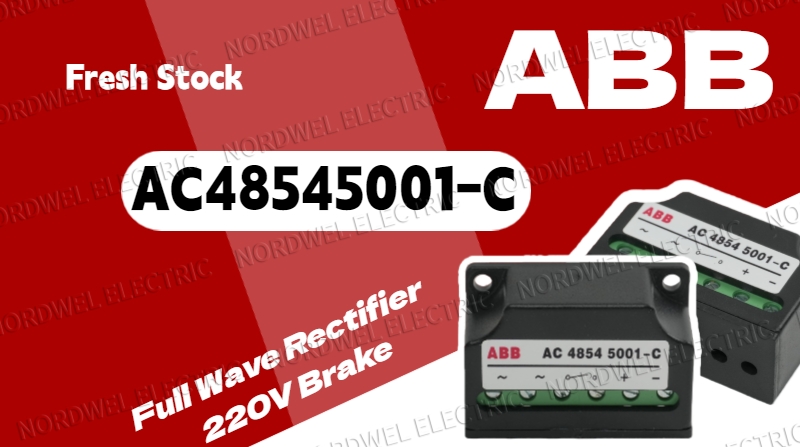
    ABB AC48545001-C: A Critical Safeguard for Industrial Braking Systems In the intricate landscape of industrial motor control, the reliability of braking systems is paramount for operational safety and equipment longevity. The ABB AC48545001-C full-wave rectifier emerges as a critical component specifically engineered for this purpose. Designed to convert alternating current (AC) to direct current (DC) for electromagnetic brakes on motors within the M2AA 090-160 frame size range, this rectifier ensures a smooth and controlled deceleration process. Its specification as a 220V device, with a technical capability extending to 380V, offers versatile application across various electrical infrastructures. The product's fundamental role is to provide the necessary DC power to engage brake coils reliably, preventing unintended movement and enhancing the safety of machinery and personnel. By delivering a consistent DC output calculated by the principle Udc = Uac/1.11, the ABB AC48545001-C guarantees that brakes engage predictably, a non-negotiable requirement in material handling, conveyor systems, and manufacturing automation where precise stopping is crucial. Technical Specifications and Global Manufacturing of ABB AC48545001-C Underpin Its Quality The robustness of the ABB AC48545001-C is defined by its precise technical parameters and its origins within ABB's global production network. With a rated power of 0.25 watts and an average forward current capacity of 3 amps, this compact, white-colored component is optimized for efficient performance within its designated role without over-engineering. Its modest gross weight of 0.03 kg and compact dimensions, including a 50 mm length, facilitate easy integration into motor terminal boxes or control cabinets, addressing space constraints common in industrial settings. Notably, the part is supplied from key ABB logistics hubs across Europe, including warehouses in Sant Quirze del Vallés (Spain) and Espoo (Finland), reflecting a streamlined and reliable supply chain. The diverse countries of origin—Spain, Italy, Sweden, and Poland—highlight ABB's integrated European manufacturing excellence, ensuring that each unit meets uniform, high-quality standards. This global yet coordinated production approach assures customers of part consistency and availability, minimizing downtime risks for maintenance and repair operations. The Strategic Supply Model for ABB AC48545001-C Supports Efficient Maintenance Operations Beyond its physical attributes, the ABB AC48545001-C is supported by a customer-centric commercial and supply model designed for maintenance efficiency. Classified as a "Modification Part" or "M-S MOD Service part," it is essential for upkeep and modernization projects, not for initial assembly. The logistical framework is exceptionally user-friendly: it has no minimum order quantity or complex order multiples, allowing customers to purchase a single piece as needed, which reduces inventory costs for end-use...
    View More
  • Allen-Bradley 1756-TBNH: Innovative Solutions Redefining Industrial Connectivity and Systems Integration
    Allen-Bradley 1756-TBNH: Innovative Solutions Redefining Industrial Connectivity and Systems Integration Nov 26, 2025
    Allen-Bradley 1756-TBNH Redefines Flexibility in Industrial Wiring Solutions The Allen-Bradley 1756-TBNH represents a significant breakthrough in industrial connectivity with its innovative Removable Terminal Block (RTB) design. As a core component connecting factory field cabling to ControlLogix I/O modules, this product sets a new standard for equipment installation efficiency and system maintenance flexibility. Compared to traditional fixed cabling solutions, the 1756-TBNH's pluggable structure significantly reduces initial wiring time and simplifies module replacement during maintenance. The product was designed with the complexities of industrial environments in mind, excelling particularly in key technical indicators such as vibration resistance, corrosion protection, and electrical isolation. Rockwell Automation's unique design, separating the terminal blocks from electronic modules, achieves a significant breakthrough by maintaining the integrity of existing cabling during module replacement. This feature allows for effective control of downtime during critical automated process maintenance. This practical design approach accurately addresses the core needs of industrial environments—minimizing downtime-induced productivity losses in fast-paced production environments. Allen-Bradley 1756-TBNH Enhances System Configuration Versatility The configuration flexibility inherent in the 1756-TBNH system provides engineers with unprecedented adaptability in addressing diverse application requirements. This terminal block family supports multiple connection methodologies including both screw-clamp and spring-clamp variants, allowing selection based on specific installation needs and operator preference. The spring-clamp option particularly accelerates wiring processes in high-density applications while maintaining reliable connections under varying temperature and vibration conditions. Furthermore, the system accommodates different wire gauges through specialized housing options, with the extended housing variant specifically engineered for 2.5 mm² (14 AWG) wiring implementations. This thoughtful approach to physical configuration extends throughout the entire ControlLogix ecosystem, ensuring that the 1756-TBNH integrates seamlessly with various I/O modules while maintaining consistent installation standards. The separate ordering process for terminal blocks and modules, while initially appearing complex, actually provides greater economic efficiency by allowing precise matching of components to application needs without forcing over-specification. Allen-Bradley 1756-TBNH Optimizes Maintenance and Repair Processes The 1756-TBNH system offers significant maintenance advantages throughout its entire lifecycle thanks to its removable design. This design allows technicians to directly replace I/O modules without interrupting field wiring, an innovation that reduces average repair time by approximately 40%. This feature is particularly important in cont...
    View More
  • Siemens 6ES7952-1AP00-0AA0 Memory Card Enhances S7-400 System Performance
    Siemens 6ES7952-1AP00-0AA0 Memory Card Enhances S7-400 System Performance Nov 19, 2025
    Siemens 6ES7952-1AP00-0AA0 Memory Module Introduce The Siemens 6ES7952-1AP00-0AA0 memory module plays an indispensable role in the SIMATIC S7-400 programmable control system. This elongated 8MB RAM memory card provides reliable data processing for industrial automation. In practical applications, it effectively supports the operation of complex control algorithms and meets the processing needs of data-intensive tasks. What engineers particularly appreciate is the module's complete compatibility with existing S7-400 hardware platforms. This feature allows users to achieve performance improvements directly without making large-scale adjustments to the existing automation architecture during system optimization. Whether for new projects or upgrades to existing equipment, this memory card can be quickly integrated into the system, demonstrating its stable and reliable data processing capabilities. Technical Specifications and Operational Characteristics of Siemens 6ES7952-1AP00-0AA0 This memory card's RAM technology provides volatile storage that maintains data integrity during operation when backed by appropriate power sources. The 8 MB capacity, while modest by contemporary standards, proves sufficient for numerous industrial applications where deterministic performance takes precedence over expansive storage. The module interfaces seamlessly with S7-400 CPUs, facilitating efficient data exchange between the memory card and processor. This integration enables the system to manage substantial program blocks and data sets, which proves essential for advanced automation tasks including motion control, complex sequencing, and real-time process monitoring. Memory Architecture and System Integration of Siemens 6ES7952-1AP00-0AA0 Within the SIMATIC architecture, the 6ES7952-1AP00-0AA0 functions within a sophisticated memory hierarchy that includes work memory, load memory, and retentive memory areas. The RAM memory card primarily serves to extend the system's data handling capabilities, working in conjunction with the CPU's integrated work memory. This collaborative memory approach allows for optimal distribution of program code and operational data, enhancing overall system efficiency. The memory management system automatically handles data initialization during state transitions, ensuring that retentive values are properly maintained during power cycles and operational mode changes. Practical Implementation and Industry Applications of Siemens 6ES7952-1AP00-0AA0 In real-world applications, this storage module is particularly suitable for scenarios requiring the processing of large amounts of data records, complex recipe management, and precise process control. Manufacturing companies using S7-400 systems have achieved secure storage of massive amounts of operating parameters and production data through this memory card. Its structural design fully considers the unique characteristics of industrial environments, maintaining continuous and stable operatio...
    View More
  • Siemens 6ES7141-3BH00-0XA0 Industrial Module: Technological Inheritance and Industrial Transformation
    Siemens 6ES7141-3BH00-0XA0 Industrial Module: Technological Inheritance and Industrial Transformation Nov 13, 2025
    The Industrial Application History of the Siemens 6ES7141-3BH00-0XA0 Module With the rapid development of industrial technology and the accelerated pace of product upgrades, Siemens officially ceased production of this module in October 2022, in accordance with its product development strategy. This decision marks the product's formal exit from the new product market and its entry into a new phase focused on after-sales service and support for the existing market. Currently, the product primarily targets the maintenance and upgrade needs of existing equipment, providing continuous technical support and service guarantees for customers still using it. Module Technical Features and Performance Analysis From a technical perspective, this module's design is ingenious. All 16 digital input channels operate at a standard 24V DC voltage, perfectly matching the voltage standards of mainstream industrial control systems. In terms of interface design, the module's eight M12 connectors employ a unique dual-channel allocation technology, allowing a single interface to simultaneously process two independent sensor signals. This design significantly improves interface utilization efficiency, maximizing device connectivity within a limited space. Particularly noteworthy is the module's protective performance; its IP65/67 protection rating ensures stable operation in the most demanding industrial environments. This rating means the module is completely dustproof and can withstand strong water flow and brief immersion, making it particularly suitable for industries requiring frequent cleaning, such as food processing and pharmaceuticals. However, users should be aware that this module requires a specific connection module (6ES7194-3AA00-0AA0) to achieve full functionality, and this connection module must be purchased separately. Product Development Background and Market Evolution A deeper look at the rise and fall of this module reveals a clear trajectory of industrial technology development. Siemens initially developed this product primarily to meet the market's urgent need for economical, practical, stable, and reliable distributed I/O solutions. Under the technological conditions at the time, this module, with its excellent environmental adaptability and ease of maintenance, indeed won the favor of many users. However, with the advent of Industry 4.0 and the rapid development of smart manufacturing technologies, traditional modules can no longer meet the higher requirements of modern industry for intelligent and networked equipment. In particular, the widespread adoption of industrial Ethernet technologies such as PROFINET in recent years has led to a new generation of modules supporting more advanced communication protocols and possessing more powerful diagnostic functions gradually becoming the market mainstream. This technological iteration is an inevitable law of industrial development, but it also brings real challenges to existing users—they must face th...
    View More
1 2 3 4 ... 14

A total of 14 pages

New Products
Leave A Message
If you are interested in our products and want to know more details,please leave a message here,we will reply you as soon as we can.
Submit

Leave A Message

Leave A Message
If you are interested in our products and want to know more details,please leave a message here,we will reply you as soon as we can.
Home

Products

contact

whatsapp